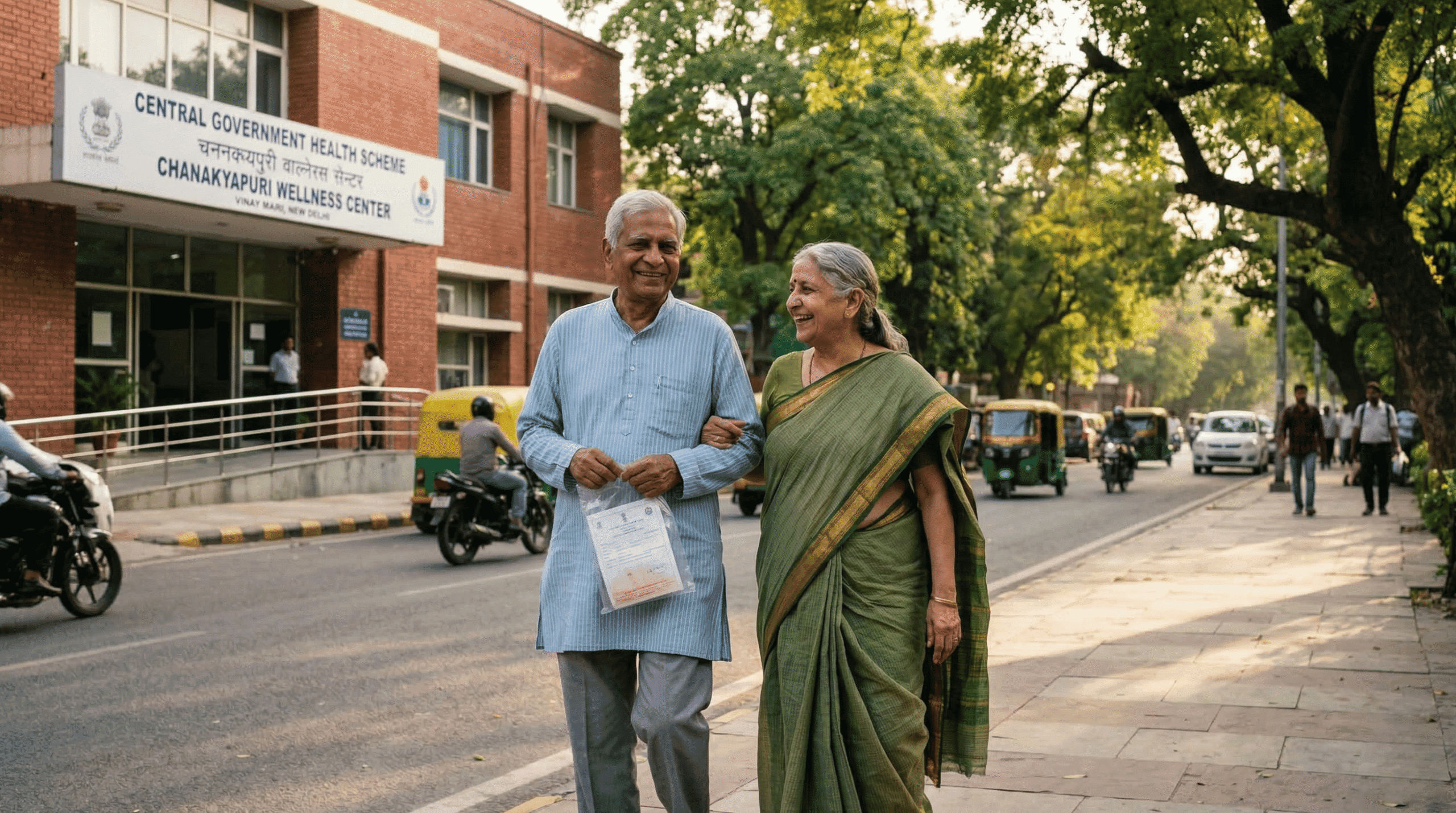
My pulse thudded against my ribs as I stood on the blistering asphalt of Vinay Marg. I had just dragged my retired father to the central government health scheme chanakyapuri dispensary, clutching a folder of faded medical records like a fragile lifeline. We needed a simple cardiology referral. A routine bureaucratic rubber stamp.
Instead, we hit a brick wall of bureaucratic static. The server was down, the queue resembled a crowded local train compartment, and his blood pressure medicine was out of stock. Total chaos.
And nobody warned me about the new indexing protocol. We arrived at 7:30 AM, yet the line already snaked around the rusted iron gates. It was a sweaty procession of retirees gripping their plastic ID cards.
Waiting in that crush felt like chewing on gravel. Brutal.
Decoding the central government health scheme chanakyapuri Bureaucracy
You cannot simply walk through the doors and demand an audience with the Chief Medical Officer. The system demands exactitude. So, we learned the punishing reality of the token system.
Patients arrive hours before the sun breaches the Delhi smog. They form jagged clusters around the dispensing counters. Waiting for your number to flash on the digital board feels like dragging concrete uphill.
Why? Because the central government health scheme chanakyapuri operates on a strict triaging mechanism. If you lack your active CGHS beneficiary ID, the clerks will bounce you back to the pavement.
But possessing the card is only half the battle. You must know exactly how to trigger the referral hierarchy.
The Referral Labyrinth
Our ultimate destination was the cardiology department at Primus Super Speciality Hospital nearby. Getting there required a green-ink signature from the local wellness center. I assumed a quick chat with the physician would secure the document.
I was painfully wrong. The doctor squinted at my father’s private lab reports and tossed them back across the scuffed metal desk.
Private diagnostic tests hold zero weight here unless backed by a prior government recommendation. An expensive mistake. We had to restart the entire diagnostic loop.
Blood draws. TMT scans. All sanctioned strictly through the internal network.
The Digital Shift and Booking Nightmares
Booking an appointment online was supposed to fix the crowding. Check the official Ministry of Health and Family Welfare directives for the latest updates. It merely shifted the bottleneck from the sidewalk to the server.
The portal crashes routinely around 9:00 AM when the traffic spikes. And scoring a slot at the central government health scheme chanakyapuri feels akin to winning a minor lottery.
You must log in precisely at 8:00 AM, fingers hovering over the mouse. Hesitate for thirty seconds, and the slots vanish. Gone.
Once you secure that digital slip, print it immediately. Do not rely on showing a PDF on your cracked smartphone screen. The barcode scanners at the registration desk are notoriously finicky with digital displays.
Securing Dental Care at the central government health scheme chanakyapuri
Dental procedures carry their own distinct flavor of administrative torture. You might think a cavity filling is a straightforward affair. Think again.
The dental wing operates on a severe quota system. They handle basic extractions and rudimentary fillings in-house. For anything complex, like a root canal or a ceramic crown, you need an external permission slip.
My neighbor attempted to get his dentures refitted here last winter. He spent three weeks chasing approvals before finally securing a spot at an empanelled private clinic in South Extension.
A grueling marathon. He later told me he felt like he was negotiating a hostage release, not fixing a tooth.
Medicine Indenting and The Wait
Getting prescribed medication is a multi-tier gauntlet. The pharmacy counters dispense common generics immediately. Paracetamol? Handed over in blister packs without a second glance.
Specialized diabetic insulin? That triggers the indenting protocol. When the central government health scheme chanakyapuri runs dry of specific chronic disease medications, the pharmacist issues an indent.
This means the government will source your drugs from an authorized local chemist. You must return two days later, armed with the indent slip, to collect your medicine.
But if a public holiday disrupts the calendar, your wait doubles. Plan your refills meticulously. Waiting until your pillbox is empty is a recipe for absolute medical panic.
Emergency Protocols and Private Empanelment
Emergencies shatter all existing rules. When my uncle suffered a severe angina attack at midnight, driving to the local dispensary was not an option. We rushed him directly to Safdarjung Hospital.
Under strict guidelines, unreferred emergency admissions at private empanelled hospitals require post-facto approval. You have precisely forty-eight hours to notify your base wellness center.
Miss this tight window, and you will swallow the entire hospital bill. The central government health scheme chanakyapuri handles these ex-post-facto requests with rigid scrutiny.
You must submit emergency certificates, discharge summaries, and a detailed justification letter signed by the treating specialist. It feels exactly like defending a legal thesis.
The Hidden Internal Hierarchy
7 Best Tax Saving Mutual Funds: Insane Wealth Builders – PayApprove
Not all beneficiaries stand on equal footing. The color of your plastic card dictates your place in the bureaucratic food chain. Sitting Members of Parliament and Supreme Court Judges bypass the standard friction.
For regular pensioners, the grind remains severe. But forming a polite rapport with the local pharmacist yields invisible dividends. They remember faces.
A quick smile might ensure they hold back a scarce strip of blood pressure medication for your ailing father. Human connections lubricate this rusty machinery.
Relying entirely on the rulebook guarantees endless frustration.
The Reimbursement Quagmire
If you purchase medicines out-of-pocket during an emergency, prepare for a paperwork avalanche. The reimbursement desk at the central government health scheme chanakyapuri is a quiet room filled with towering stacks of files.
You must paste every original revenue receipt onto a blank sheet of paper. You need cancelled cheques, mandate forms, and photocopies of your active beneficiary ID.
One missing signature, and the clerk rejects the entire bundle. We submitted a claim for a private MRI scan last July.
It took four months, three follow-up visits, and a polite but firm argument with the Chief Medical Officer to get the funds credited. Exhausting.
The Unspoken Value of the central government health scheme chanakyapuri
Despite the heavy red tape and the sweltering waiting rooms, this safety net holds massive value. Private healthcare in Delhi drains savings accounts with ruthless efficiency.
A single week in a private ICU can obliterate decades of frugal saving. This system acts as a bulky, frustrating shield against absolute financial ruin.
You endure the queues at the central government health scheme chanakyapuri because the alternative is terrifying. We complain about the indent delays and the sullen clerks, but we clutch those plastic cards tightly.
Specialist Consultations and The Waiting Game
Getting a direct consultation with a specialist involves navigating a separate sub-system. The wellness center occasionally hosts visiting specialists from major government hospitals like Dr. Ram Manohar Lohia Hospital.
These visiting hours are erratic. You must constantly check the faded notice board pinned outside the Chief Medical Officer’s cabin. If you miss the announcement, you forfeit your chance.
And getting a referral to an outside specialist means justifying the necessity to your primary physician. The central government health scheme chanakyapuri doctors act as fierce gatekeepers. They do not hand out referrals simply because you asked nicely.
Preparing for Your First Visit
Never arrive empty-handed. Bring a dedicated folder with a chronological medical history. Government doctors despise disorganized patients who fumble for scattered prescription slips.
Carry a water bottle. The drinking water cooler in the waiting area routinely breaks down during the suffocating Delhi summers.
Always carry a pen. You will need it to fill out indent registers and attendance ledgers. The central government health scheme chanakyapuri rarely provides functional stationery for visiting patients.
Deciphering the central government health scheme chanakyapuri Code
The vocabulary used inside these walls is thick with acronyms. MRC, CMO, ALC. Learning this language is a mandatory survival mechanism.
If the pharmacist tells you a drug is “NA” (Not Available), you must immediately demand an “LP” (Local Purchase) indent. Do not nod quietly and walk away.
You must advocate for yourself aggressively but politely. The staff at the central government health scheme chanakyapuri are overwhelmed by sheer volume. If you remain passive, you sink directly to the bottom of the priority list.
The Senior Citizen Reality
My father is eighty-two. Making him stand in the scorching heat for a routine blood test felt deeply wrong. But the system bends for absolutely no one.
They recently introduced a dedicated queue for octogenarians. It operates slightly faster than the general line, but the physical toll remains heavy.
I learned to drop him off at the seating area, sprint to the registration desk, and manage the administrative heavy lifting myself.
The Grievance Redressal Illusion
What happens when the system completely fails you? There is a designated grievance portal. You can file complaints through the Centralized Public Grievance Redress and Monitoring System.
Submitting a complaint online generates an immediate tracking number. It gives you a fleeting sense of power. That power is mostly an illusion.
Resolutions filter down through thick layers of bureaucracy. A complaint about rude behavior at the central government health scheme chanakyapuri might take sixty days to process. By then, you have already moved on. The system outlasts your anger.
The Agony of Card Renewals
Your plastic lifeline comes with a strict expiration date. Ignoring that tiny printed date is a fatal error.
When my father’s card expired last November, the system locked us out instantly. The pharmacist at the central government health scheme chanakyapuri stared at his screen, shook his head, and handed back our prescriptions.
Renewing the card means dealing with a completely different governmental department. You must gather pension payment orders, residential proofs, and fresh passport photographs. A completely separate headache.
Confronting the Chief Medical Officer
The CMO sits behind a heavily scarred wooden desk, walled in by leaning towers of patient files. Getting into that office requires bypassing the fiercely protective nursing staff.
You only need the CMO for exceptional approvals. Things like prolonged sick leave certificates or specialized out-of-network treatments. Standing in that office feels like standing before a severe judge.
You must plead your case quickly. The CMO at the central government health scheme chanakyapuri reviews dozens of these complex requests hourly. Speak clearly, hand over the correct photocopies, and never interrupt.
The Authorized Local Chemist (ALC) Game
When the dispensary runs out of your medication, the ALC steps in. But the ALC is an independent private pharmacy contracted by the government. They operate on their own distinct logic.
Sometimes, the ALC refuses to stock expensive imported insulin brands due to payment delays from the ministry. When this happens, you are caught in a miserable crossfire.
The central government health scheme chanakyapuri tells you to visit the ALC. The ALC tells you to complain to the government. You bounce between them, holding an empty pillbox.
Life Hacks for the Frequent Visitor
Avoid Mondays. Mondays are an absolute warzone. The weekend backlog floods the tiny waiting room, creating a suffocating crush of bodies.
Thursday afternoons offer a bizarre pocket of quiet. The rush subsides, and the clerks actually make eye contact when you hand over your prescription booklet.
Make photocopies of everything. If a clerk at the central government health scheme chanakyapuri loses your original referral slip, you cannot retrieve it. Your photocopies are your only armor against administrative amnesia.
The Future of Government Healthcare
They keep promising massive digital upgrades. Biometric scanners. Seamless electronic health records. A completely paperless utopia.
The reality on the ground remains stubbornly analogue. The rubber stamps still hit the ink pads with a loud thwack. The thick paper registers still dominate the pharmacist’s desk.
Adapting to this environment requires endless patience and a heavy dose of cynical realism. You cannot force the machine to work faster. You can only learn its rhythm.
The Unending Cycle
We finally walked out of the compound at 2:00 PM. My father had his referral slip, securely folded in his front shirt pocket.
We won this minor skirmish, but the chronic illness requires us to return next month. And the month after that. The rules will inevitably change again, without warning, trapping another wave of patients in the confusion.
When you step up to that frosted glass counter and slide your plastic card across the scratched laminate, do you truly know what silent administrative hurdles await your next prescription?