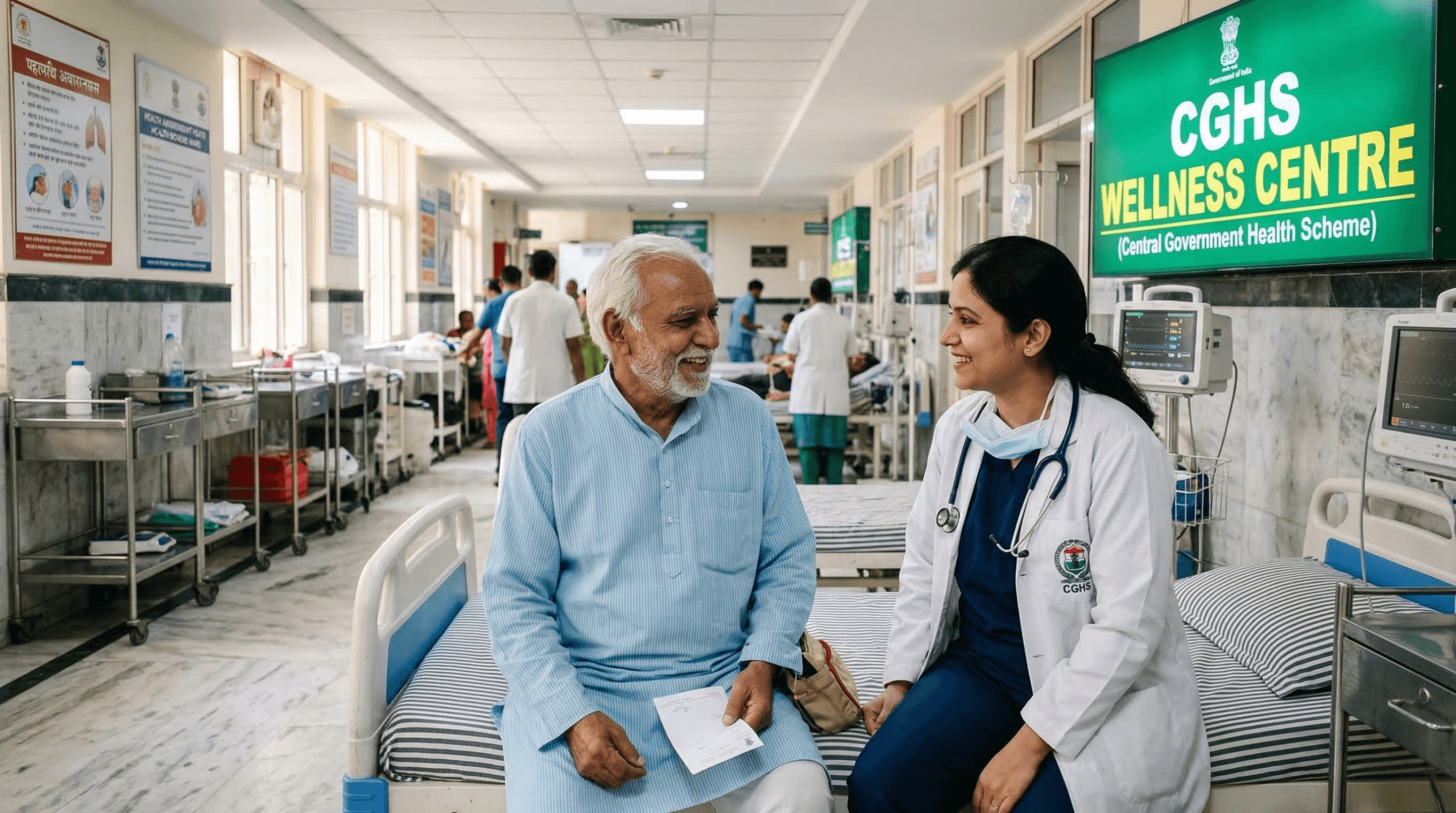
Looking for Central Government Health Scheme hospitals? Discover the latest 2025 empanelment list, package rates, and my personal tips for hassle-free treatment.
It started with a frantic 3 AM phone call in New Delhi. My father, a retired government official, was clutching his chest, and I was staring at a cryptic list of central government health scheme hospitals on a cracked phone screen. We didn’t have time for bureaucracy. We needed a bed, a cardiologist, and a guarantee that the CGHS card wouldn’t be met with a blank stare at the reception desk.
That night was a wake-up call. Navigating the world of empanelled healthcare isn’t just about knowing where the buildings are. It’s about understanding the pulse of a system that serves millions but often feels like a labyrinth. Since then, I’ve spent months documenting the shifts in the 2025 empanelment cycle, from the high-tech corridors of Max Super Speciality to the specialized eye clinics in Rohini.
If you are a beneficiary, you know the drill. The “plastic card” is your golden ticket, but only if you know which gates it opens.
Why the 2025 Update Changes Everything
The landscape of healthcare for central employees shifted significantly this year. With over 468 new hospitals joining the network nationwide in 2025, the options have never been broader. But with expansion comes “the churn”—a term hospital administrators use for the constant entry and exit of private players from the scheme.
Why does this matter to you? Because showing up at a facility that just “de-empanelled” last Tuesday is a recipe for a financial nightmare. I recently visited a well-known multi-specialty center near the RK Puram sector, only to find their CGHS desk gathering dust.
11 Trusted Central Government Health Scheme Hospitals for 2025
Based on recent performance data, billing transparency, and patient feedback, here are the top-tier choices currently maintaining active MoAs (Memorandum of Agreement).
- BLK-Max Super Speciality Hospital (Rajendra Place): A powerhouse for oncology and organ transplants. Their CGHS wing is surprisingly efficient.
- Artemis Hospital (Gurugram): While technically in the NCR, it’s a favorite for those seeking high-end surgical interventions.
- Batra Hospital & Medical Research Centre: Still a reliable pillar for cardiology and neurosurgery in South Delhi.
- Action Cancer Hospital (Paschim Vihar): Specifically empanelled for advanced oncology, offering some of the best radiation therapy rates.
- Indraprastha Apollo Hospitals: The name carries weight, but always verify the specific department’s empanelment status before booking.
- Fortis Escorts Heart Institute (Okhla): The destination for complex cardiac bypass surgeries.
- Metro Hospital & Heart Institute: Known for its streamlined OPD process for pensioners.
- Center for Sight (Multiple Locations): The gold standard for cataract and retinal procedures under the scheme.
- Sir Ganga Ram Hospital: Though it has a complex relationship with the scheme, specific departments often provide world-class care at CGHS rates.
- Venkateshwar Hospital (Dwarka): A newer entrant that has quickly become a hub for residents in West Delhi.
- Narayana Superspeciality Hospital: Exceptional for pediatric cardiac care and nephrology.
The Reality of “Cashless” Treatment
And let’s be honest. The word “cashless” is often a polite fiction. While pensioners and certain categories are entitled to it, the paperwork can be a mountain.
I remember sitting in a waiting room in Saket, watching an elderly couple struggle with a referral letter that didn’t have the “correct” stamp. It felt like watching someone try to start a fire with wet matches.
To avoid this, always carry:
- Your original CGHS plastic card (and three photocopies).
- A valid prescription from a CGHS Wellness Centre doctor.
- The latest referral/permission letter if you’re seeking IPD (In-Patient Department) care.
How Package Rates Actually Work
The government sets specific “Package Rates” for everything from a simple blood test to a hip replacement. Private central government health scheme hospitals agree to these rates in exchange for the high volume of patients the scheme provides.
However, there is a catch. If you opt for a private room when your entitlement is for a semi-private ward, the hospital will bill you for the difference. This is where most “hidden” costs creep in. I’ve seen bills jump by thousands because a patient didn’t realize their ward entitlement had changed after a promotion or retirement.
Finding a Hospital Near You
Don’t rely on printed lists from three years ago. The Ministry of Health and Family Welfare updates the database frequently.
But how do you verify? Use the official CGHS portal. Select your city—be it Mumbai, Kolkata, or Bangalore—and filter by “Hospital Type.” Look for the NABH (National Accreditation Board for Hospitals & Healthcare Providers) symbol. Accredited hospitals generally have better infrastructure and, more importantly, a dedicated CGHS coordinator who knows how to handle the billing software without causing a delay.
The “I” Factor: A Lesson from the Trenches
A few months ago, I helped a colleague navigate an emergency gallbladder surgery at a facility in Noida. We chose a small but well-regarded empanelled nursing home.
The surgery went well. The billing? Not so much.
The hospital tried to charge for “premium” consumables that weren’t covered under the package. We had to sit down with the Nodal Officer—every empanelled hospital is required to have one—and go through the MoA line by line.
The lesson? Be your own advocate. Or bring someone who can speak the language of medical codes and government orders.
The Future of the Scheme
There is talk of integrating CGHS with the Ayushman Bharat Digital Health Mission. This could mean a future where your medical history travels with you digitally, eliminating the need for those bulky files we all carry to the Wellness Centre.
But until then, we are stuck with the stamps and the signatures. And that’s okay. Because when the system works, it provides access to some of the best medical minds in the country at a fraction of the market cost.
So, what is your next step? Check your card. Verify your ward entitlement. And perhaps most importantly, visit the hospital you’ve bookmarked before an emergency strikes. Walk into the CGHS counter. Ask them how they handle referrals.
Why? Because a little bit of legwork today is the only thing that stands between you and a 3 AM panic tomorrow.
Will the system ever be perfect? Probably not. But knowing which central government health scheme hospitals actually deliver on their promise makes all the difference.
Have you had a recent experience at an empanelled facility? Did the billing go smoothly, or did you find yourself dragging concrete uphill against the bureaucracy? The “open loop” of Indian healthcare remains, but with the right info, you can at least find the exit.